

 中文
中文  en
en 

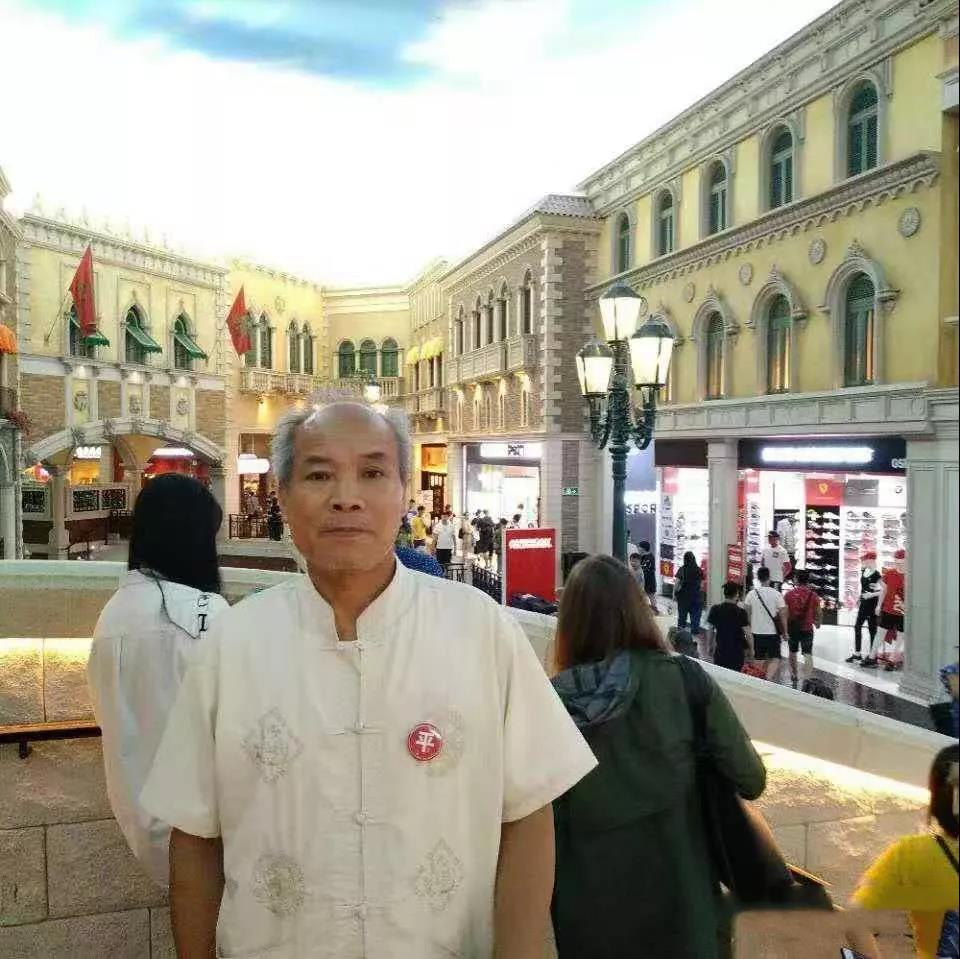
Liu Liling
Liu Liling
Personal Profile
Liu Liling, style name Chongwen, pseudonym Yiyou; born in April 1958 in his ancestral hometown Pengcheng;worked for forty years at the Liguo Town Central Middle School in Xuzhou;founded Xuzhou Yicheng Painting and Calligraphy Academy and internal art academies within Liguo Middle School, Hanguang Middle School, and Zhangji Primary School of Liuji Town, as well as artistic institutions such as the Chinese Painting and Calligraphy World Tour Xuzhou Contemporary Masters Collection Art Exhibition Organizing Committee and the National Committee for the Evaluation of Children's Art Districts, and successfully conducted many large-scale painting and calligraphy exhibitions, competitions, awards, and promotions of famous painters and calligraphers.Born into a family with a deep cultural heritage, he has loved literature and art since childhood, and had the fortune of receiving years of artistic enlightenment education from Professor Liu Cheng, a disciple of Liu Haiyu.His calligraphy started with the regular script of Yan and Liu, then moved on to the running script of Ouyang, Su, Huang, Mi, Zhao, and Dong, later studied calligraphy at the Nanjing Institute of Arts in the undergraduate program, comprehensively explored various styles including regular, running, cursive, modern cursive, seal, and clerical scripts, as well as Mao's style, and deeply studied the essence of the calligraphy of the Two Wangs, gaining profound understanding of brushwork and ink techniques. He consciously applies the dialectical relationship between brushwork, brush movement, and brush intention, creating works according to the principle of "original ideas within the rules, subtle meaning beyond boldness."He particularly admires the classical school of the Two Wangs for their elegant style, Su Shi's emphasis on artistic conception in small works, and the powerful creation of large-scale works by Yan Zhenqing and Kang Youwei, who integrated ancient styles into their creations.He initially learned landscape painting from the "Jiezhiyuan Painting Manual," then studied Western painting, sketching, watercolor, and oil painting. Later, he systematically studied traditional Chinese landscape painting under professors Liang Shunian and Zhang Ping at the Central Academy of Fine Arts, particularly admiring the personality charm and landscape brushwork of Yuan Dynasty master Wang Meng, as well as the creative secrets of Huang Gongwang and Liu Haiyu on the beauty of life and strength, especially the legendary masterpiece "The Dwelling in the Fuchun Mountains."He systematically learned the concepts, thoughts, knowledge, and techniques of freehand and meticulous flower-and-bird painting from professors Gao Guanhua, Tian Shiguang, and Jin Hongjun, particularly admiring masters such as Qi Baishi, Pan Tianshou, Lin Fengmian, Xu Beihong, Wu Changshuo, Xu Wei, and Huang Quan, as well as Huang Zhou and Li Gonglin.He systematically learned the concepts, thoughts, knowledge, and techniques of freehand and meticulous figure painting from professors Ye Qianyu, Yao Yuduo, Yao Zhihua, Li Qi, Huang Jun, and Chen Mou, particularly admiring master artists such as Gu Kaizhi, Yan Liben, Wu Daozi, and Zhou Fang, as well as the legendary works like the "Flying Heaven" line drawings of the Dunhuang Grottoes and the "Night Banquet of Han Xizai" scroll.
He is currently dedicated to learning the national intangible cultural heritage skills of Ma Peitong, a master of dry ink and dry color, particularly admiring Ma Peitong's unique composition of Han dynasty stone reliefs and carving techniques for shaping cave Buddha images, as well as his grand and profound large-scale paintings of the mother lake and poplar mountains.Teacher Liu is also skilled in rapid art and calligraphy education, having compiled "Five Days to Learn Painting" and "Five Days to Learn Calligraphy."As the principal investigator of the Jiangsu Fine Arts Association's project "Practical Research on Cultivating Aesthetic Quality Through Basic and Specialized Art Education in Junior High Schools," he is actively promoting the results of the project—Promoting Socialist Cultural Education in Schools—striving to establish more art academies and art museums within primary and secondary schools across the country and even around the world, so that they can serve as platforms for watching online television courses by master artists and their disciples, as well as on-site training centers.Currently, he is the legal representative and executive director of Xuzhou Yicheng Painting and Calligraphy Academy, a lifetime member of the Guoyi People's Painting and Calligraphy Academy, a member of the Art and Calligraphy Professional Committee of the Xuzhou Education Association, a member of the Xuzhou Calligraphers Association and the Tongshan District Artists Association, and a visiting professor at the Taipei Palace Museum Painting and Calligraphy Academy.After retirement, he resides in Nanjing, devoting himself entirely to compiling and editing the "Master Artists' Disciples' Art and Calligraphy Tutorial," aiming to assist others in teaching and guiding students to learn the skills of master artists and intangible cultural heritage inheritors, as well as the children's paintings of Suining, so that they can create works suitable as state gifts for foreign friends and participate in the contemporary masters' collection art exhibition tour around the world.He calls for educational reform and management model innovation, advocating that all higher education institutions should become online TV universities, and that every professor's class should be recorded and live-streamed, maximizing the number of remote learners.Students within the institution are both live audience members and remote learners assisting in teaching.Art associations and school art academies use paper gold collateral from painting and calligraphy works to provide loans of one million yuan per person for education and entrepreneurship, greatly advancing the new era socialist property law requirements of the 19th Congress of Marxism-Leninism regarding the ownership of production materials, the management and usage rights of the contracting responsibility system, and the certification and confirmation rights, thereby investing in and paying social insurance and housing funds for enterprises and public institutions to ensure employees have income above the average standard of living, and charging tuition to train qualified and specialized reserve talents, thus effectively implementing the targeted poverty alleviation and wealth-building projects of mass entrepreneurship and innovation—common prosperity—ensuring the five blessings of the people—setting the lofty ambition of moving to other planets—opening up an eternal source of happiness through institutional road.
He is currently dedicated to learning the national intangible cultural heritage skills of Ma Peitong, a master of dry ink and dry color, particularly admiring Ma Peitong's unique composition of Han dynasty stone reliefs and carving techniques for shaping cave Buddha images, as well as his grand and profound large-scale paintings of the mother lake and poplar mountains.Teacher Liu is also skilled in rapid art and calligraphy education, having compiled "Five Days to Learn Painting" and "Five Days to Learn Calligraphy."As the principal investigator of the Jiangsu Fine Arts Association's project "Practical Research on Cultivating Aesthetic Quality Through Basic and Specialized Art Education in Junior High Schools," he is actively promoting the results of the project—Promoting Socialist Cultural Education in Schools—striving to establish more art academies and art museums within primary and secondary schools across the country and even around the world, so that they can serve as platforms for watching online television courses by master artists and their disciples, as well as on-site training centers.Currently, he is the legal representative and executive director of Xuzhou Yicheng Painting and Calligraphy Academy, a lifetime member of the Guoyi People's Painting and Calligraphy Academy, a member of the Art and Calligraphy Professional Committee of the Xuzhou Education Association, a member of the Xuzhou Calligraphers Association and the Tongshan District Artists Association, and a visiting professor at the Taipei Palace Museum Painting and Calligraphy Academy.After retirement, he resides in Nanjing, devoting himself entirely to compiling and editing the "Master Artists' Disciples' Art and Calligraphy Tutorial," aiming to assist others in teaching and guiding students to learn the skills of master artists and intangible cultural heritage inheritors, as well as the children's paintings of Suining, so that they can create works suitable as state gifts for foreign friends and participate in the contemporary masters' collection art exhibition tour around the world.He calls for educational reform and management model innovation, advocating that all higher education institutions should become online TV universities, and that every professor's class should be recorded and live-streamed, maximizing the number of remote learners.Students within the institution are both live audience members and remote learners assisting in teaching.Art associations and school art academies use paper gold collateral from painting and calligraphy works to provide loans of one million yuan per person for education and entrepreneurship, greatly advancing the new era socialist property law requirements of the 19th Congress of Marxism-Leninism regarding the ownership of production materials, the management and usage rights of the contracting responsibility system, and the certification and confirmation rights, thereby investing in and paying social insurance and housing funds for enterprises and public institutions to ensure employees have income above the average standard of living, and charging tuition to train qualified and specialized reserve talents, thus effectively implementing the targeted poverty alleviation and wealth-building projects of mass entrepreneurship and innovation—common prosperity—ensuring the five blessings of the people—setting the lofty ambition of moving to other planets—opening up an eternal source of happiness through institutional road.
para-title
TAG:
Liu Liling